
Japan’s liquor tax reform of 1 October 2026 has been reported almost entirely as “beer gets cheaper”. On the same day, chu-hai, sours and canned highballs went up. The tax on a 350ml can rose from ¥28 to ¥35. Beer-type drinks have been re-rated in three stages since 2020; for chu-hai, this is the first increase ever. Below is a calculator that turns your drinking habit into an annual figure, followed by the “10-degree cliff” that explains why no canned chu-hai goes above 9% ABV.
· Chu-hai, sours and canned highballs (sparkling drinks under 10% ABV): ¥28 → ¥35 per 350ml can, ¥40 → ¥50 per 500ml can
· One 350ml can a day works out to roughly ¥2,600 more per year (about ¥2,800 with consumption tax)
· The tax gap against beer nearly halves, from ¥35.35 to ¥19.25
What changes: ¥28 to ¥35 per 350ml can
Under the Liquor Tax Act, most chu-hai, sours and canned highballs fall into a category called “other sparkling liquors”, defined as drinks other than beer and happoshu that are under 10 degrees of alcohol and sparkling. The rate on that category rises from ¥80,000 to ¥100,000 per kilolitre on 1 October 2026[NTA].
| Category | Until Sept 2026 | From Oct 2026 | Per 350ml can |
|---|---|---|---|
| Beer | ¥181,000/kL (¥63.35) | ¥155,000/kL (¥54.25) | −¥9.10 |
| Happoshu (under 25% malt) and “new genre” | ¥134,250/kL (¥46.99) | ¥155,000/kL (¥54.25) | +¥7.26 |
| Other sparkling liquors (chu-hai, sours, canned highballs) | ¥80,000/kL (¥28) | ¥100,000/kL (¥35) | +¥7.00 |
This is the final stage of a phased alignment decided in the FY2017 tax reform. Where similar drinks carry different tax rates, product development bends toward whichever category is taxed least; the reform sets out to correct that on a revenue-neutral basis[MOF]. The unification of the three beer categories is covered in the 2026 beer tax reform. Sake and fruit wine were already aligned in October 2023 and, together with distilled spirits such as whisky, are outside this reform.
Calculator: what your drinking adds up to
Pick a can size and how many you drink per week. The tool shows the change in annual liquor tax, plus what the same number of beers would cost in tax after the reform.
Note: the figures are liquor tax only. Shelf prices also move with ingredient and logistics costs and each maker’s pricing decisions.
The gap against beer halves, from ¥35 to ¥19
The bigger story is not the amount but the narrowing gap.
| Liquor tax gap per 350ml can | Before | After |
|---|---|---|
| Beer minus chu-hai | ¥35.35 | ¥19.25 |
| “New genre” minus chu-hai | ¥18.99 | ¥19.25 |
The beer-to-chu-hai gap roughly halved, while the gap between “new genre” (third-category beer) and chu-hai barely moved. So the reform does little to the “happoshu and new genre to chu-hai” trade-down, and a lot to the distance between chu-hai and real beer. Beer fell ¥9.10 a can while chu-hai rose ¥7.00, closing the gap by ¥16.10 in tax terms. Price parity has not arrived, but “chu-hai because it is cheaper” is now a weaker argument.
Why “strong” cans stop at 9%: the 10-degree cliff
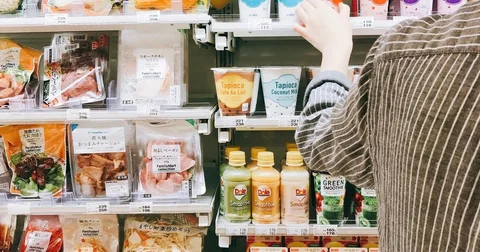
Walk the chu-hai shelf and you will see 3%, 5%, 7% and 9% — and almost nothing at 10% or above. That is not a coincidence; it is where the tax category changes.
To count as “other sparkling liquors” a drink must be under 10 degrees of alcohol. At 10 degrees or above it leaves the category and is taxed by what it actually is — as a liqueur (¥120,000/kL under 13 degrees, or ¥42 per 350ml) or as spirits (¥200,000/kL under 21 degrees, or ¥70)[NTA].
A 9-degree can pays ¥28 per 350ml (¥35 after the reform). Push it to 10 degrees and, as a liqueur, it jumps to ¥42 — a 50% increase in tax for one extra degree. That is why makers stop at 9%.
There is a special measure that caps the rate on low-alcohol spirits and liqueurs at ¥80,000/kL, but it applies only to non-sparkling drinks, so a carbonated can cannot use it.
The reform halved this cliff. Before, 9 degrees (¥28) and 10 degrees (¥42) were ¥14 apart; now ¥35 and ¥42 are ¥7 apart.
How to shop after October
Cheap old-rate stock will not linger on shelves. Liquor held in the distribution chain at midnight on the day of the change was adjusted for the rate difference through a floor-stock tax (a floor-stock refund for beer). The filing deadline is 2 November 2026[NTA].
The real gain is in changing how you buy. With beer down ¥9.10 and chu-hai up ¥7.00, anyone who has been choosing chu-hai on price should compare it with beer on the shelf tags.
Summary
- From October 1, 2026, liquor tax on chuhai, sour drinks, and canned highballs rises from ¥28 to ¥35 for a 350ml can, and from ¥40 to ¥50 for a 500ml can.
- Someone who drinks one 350ml can a day faces an extra burden of about ¥2,600 a year (about ¥2,800 including consumption tax).
- The liquor tax gap with beer shrinks by nearly half, from ¥35.35 to ¥19.25, weakening the "chuhai because it's cheap" reasoning.
- Strong-type chuhai tops out at 9% ABV because at 10% or above it is classified as a liqueur, pushing the tax up to ¥42 per 350ml.
- Stock at the old tax rate gets adjusted via the inventory tax adjustment, so comparing price tags is more practical than stockpiling.
Related articles


Popular articles

Sources: National Tax Agency, liquor tax rate table (1 Oct 2023 – 30 Sept 2026); NTA, floor-stock tax and refund on liquor; Ministry of Finance, materials on liquor tax. General information only; consult a tax office or a licensed tax accountant for individual matters.